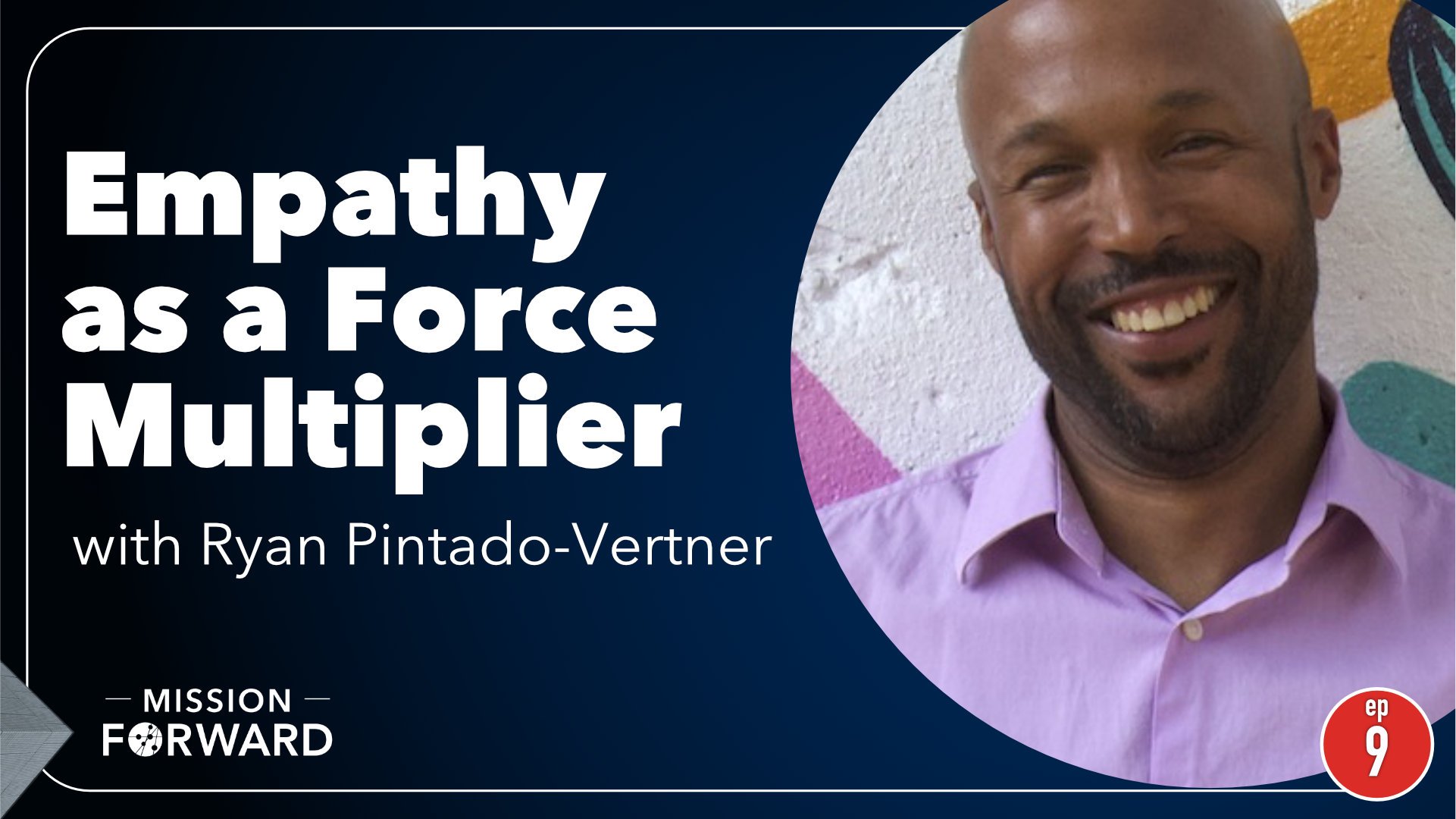
Empathy as a Force-Multiplier with Ryan Pintado-Vertner
About This Episode
It was his experience in the consumer packaged goods industry that taught our guest this week how to channel his empathy. He found it by way of the institution’s appreciation for Design Thinking in product development. “One of the things that you do in design thinking very explicitly is that you obsess over the problem that you’re solving in people’s lives. … They name that empathy.”
For Ryan Pintado-Vertner, that experience connected a new vernacular to something he’d known all along. Empathy — that sensitivity to others’ experience — described both his expertise in product development and his desire to change the world through his activism.
And thus, Smoketown, LLC was born. The name? A callback to Louisville’s oldest African-American neighborhood founded by emancipated slaves after the Civil War. To Pintado-Vertner and team, “it represents extraordinary potential hiding in plain sight.”
This week’s show goes straight to the heart of the dynamics in entrenched business processes that serve to stifle innovation through diversity and limit opportunities for marginalized communities. The opportunity, says Pintado-Vertner, lies in demography.
“They are more likely to lean into progressive expectations for how the economy should work better,” he says of recent generations. “What that means for us, how we think about this moment, is that this is not a moment at all. It is a building up of increasing power and influence of generations who do not share our expectations of the corporations they interact with; what we’re seeing right now is simply going to accelerate.”
Smoketown is an incredible operation with a powerful team shepherding its legacy. Ryan’s insights on that legacy and the historical events that shape our collective outlook today make him the perfect guest to take on such challenging conversations.
